
Sustainable fashion is about reimagining how we buy, wear, and dispose of clothing to protect the planet, support ethical labour, and invite creativity into what we wear. Traditional fast fashion relies on rapid production, low costs, and high turnover, leading to pollution, waste, and exploitation across global supply chains.
The CRE8 (Campaign for RE8) initiative by Fairtrade India and the Centre for Social Markets, supported by the European Union Switch Asia program introduces a powerful, easy-to-remember framework — the 8 REs, to help individuals and institutions transition to conscious fashion choices.
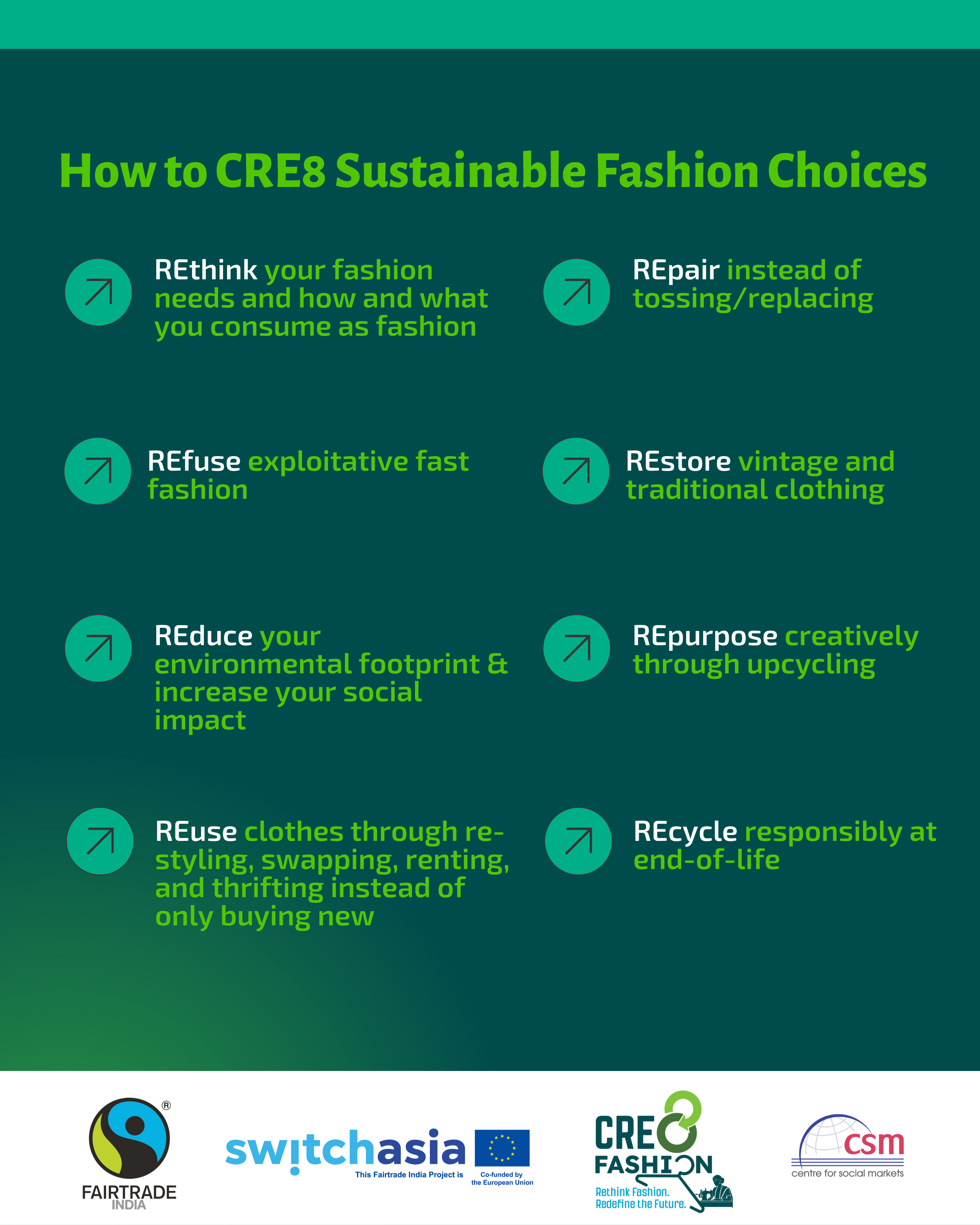
1. REthink Your Fashion Needs
The first step in sustainable fashion is awareness. Rethink encourages us to question habitual shopping and impulse buys. Instead of seeing fashion as disposable, ask: Do I need this item? Will I wear it often? This mindset shift can significantly reduce overconsumption and curb waste.
2. REfuse Exploitative Fast Fashion
Refusing means actively choosing not to support brands and trends that promote exploitative labour practices or environmentally harmful production. Saying no to cheap, poorly made garments pushes the industry toward better standards and sends a message that ethics matter.
3. REduce Your Environmental Footprint
Reducing consumption is one of the most impactful steps you can take. Fewer purchases mean fewer resources like water, energy, and chemicals are used on new garments, and less textile waste piles up in landfills.
4. REuse Clothes
Before recycling or disposing of clothes, reuse them. Wear your clothing more often, swap with friends, rent outfits for special occasions, or buy second-hand. This extends the life of garments and reduces demand for new production.
5. REpair Instead of Replace
Small fixes can add big value. Repairing a seam, replacing a button, or patching a tear keeps garments in circulation longer and discourages the throwaway mentality that fuels fast fashion waste.
6. REstore Vintage & Traditional Clothing
Restoring celebrates the story in older pieces. Bringing vintage or heritage clothing back to life enriches wardrobes with unique style while honouring cultural craftsmanship and reducing new clothing production.
7. REpurpose Creatively
Repurposing is about creativity, transforming old clothes into something new. Think turning worn shirts into tote bags or scraps into accessories. Upcycling not only diverts textiles from waste but also unleashes personal style.
8. REcycle Responsibly
When a garment truly reaches the end of its life, recycling is the last responsible step. Proper textile recycling helps keep materials out of landfills and feed them back into production loops, conserving resources and reducing pollution.
By following the 8 REs of sustainable fashion, each of us — whether a student, consumer, or business leader, it can help create a more ethical, mindful, and circular fashion culture. Every choice, from buying less to repairing more, builds toward a future where fashion respects people and the planet.